The Historic Eastside's Median Price Is Measuring the Wrong Thing
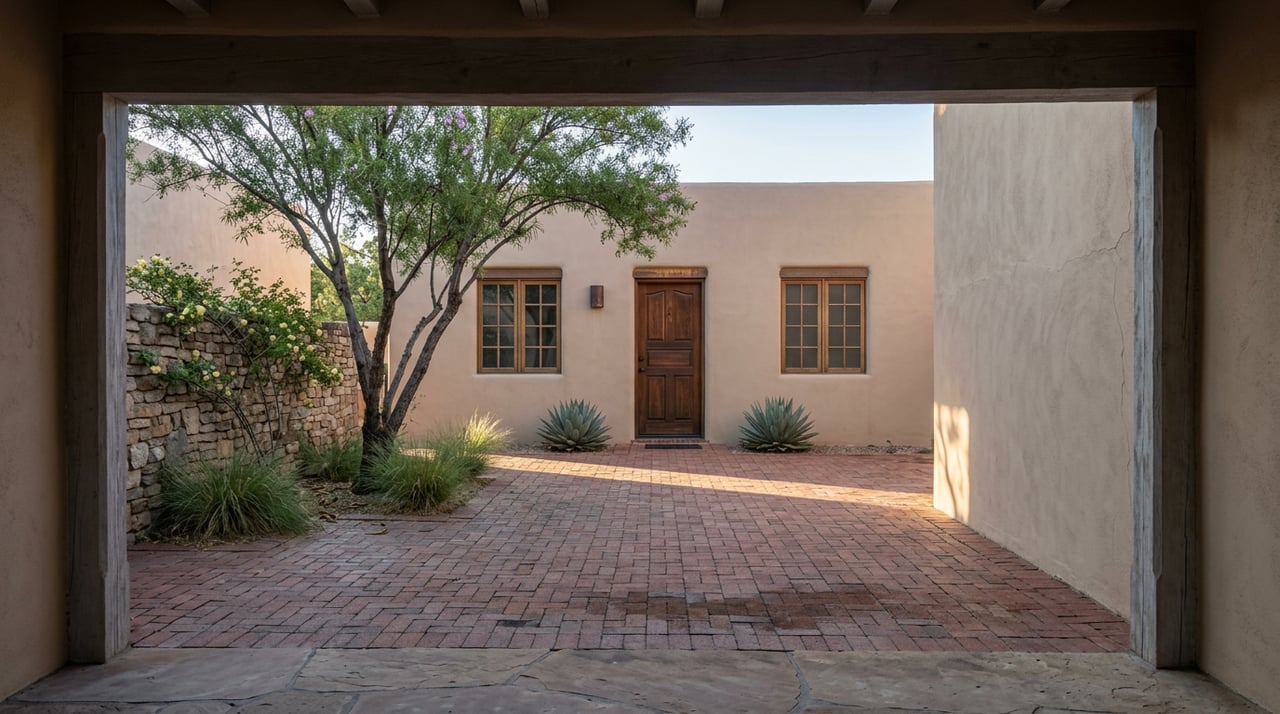
Look up the Historic Eastside's median home price on three different sites this week and you will get three different answers, and none of them will agree on which direction the market is moving. One report has it near $1.29 million. Another puts it at $1.6 million, down 16.7 percent from a year earlier. A third lands at $1.4 million, down 11 percent over the trailing twelve months. All three claim to describe the same handful of blocks between Paseo de Peralta and the foothills.
The instinct is to pick the number that sounds most authoritative and move on. That instinct is the mistake. The gap between these figures is not noise to be ignored. It is the single most useful thing you can know about how to read price data for this neighborhood, and it applies whether you are comparing the Eastside to Eldorado, to South Capitol, or to a subdivision back home.
Here is what a buyer researching the Historic Eastside in late summer 2026 is actually looking at:
| Source | Time window | Median sale price reported |
|---|---|---|
| A Sotheby's International Realty market update | Q2 2026 | roughly $1.29 million |
| Redfin's Santa Fe Historic District page | trailing 3 months ending July 2026 | $1.6 million, down 16.7% year over year |
| A national listing aggregator's Historic Santa Fe page | trailing 12 months ending April 2026 | $1.4 million, down 11% year over year |
Redfin's own page for the same district adds a fourth data point that contradicts the other two on its own platform: median price per square foot at $558, down 38.5 percent year over year, while average house price for the same month was reported up 0.8 percent. One page. Three metrics. Three different directions.
If your first reaction is that someone made an error, you are half right, but not in the way you think. Nobody miscalculated. The math behind each number is sound. What breaks down is the assumption underneath all of it, that a median price means the same thing in the Historic Eastside that it means in a subdivision with three hundred sales a month.
That same Redfin snapshot recorded 322 homes sold citywide in Santa Fe in July 2026. In the Historic District specifically, the count for that same month was 11.
A median is just the middle value of a sorted list. When the list has 322 entries, one unusual sale barely moves the needle. When the list has 11 entries, a single $6 million compound closing, or failing to close, shifts the median by hundreds of thousands of dollars in either direction. That is not a market trend. That is arithmetic responding to whichever specific houses happened to change hands that month.
This is why the Historic Eastside can show a falling median and a rising average in the same reporting period. The average is being pulled by whatever high-end estate sold. The median is responding to whichever mid-range casita happened to close instead of a compound. Neither number is wrong. Neither number is describing "the market" the way that phrase gets used for a neighborhood with real transaction volume.
Compare that to the Historic Eastside's price range on its own terms. Listings here run from roughly $900,000 for a small casita or condominium up to more than $10 million for a large historic compound. A single-family home in the middle of that range typically sells somewhere between $1 million and $4 million. With a spread that wide and a sales count that thin, the median isn't a center of gravity. It's whichever end of the spectrum happened to transact.
The reason this neighborhood produces such lopsided small samples isn't abstract. It's the property type.
The Historic Eastside includes multi-building compounds that don't behave like ordinary single-family comps. One recent listing described a property built by Eva Scott Fenyes and her descendants in 1926, sitting on just over three acres with a 5,450 square foot main house and a separate 2,313 square foot carriage house. Another was part of a six-unit compound built by Jay Parks off San Antonio Street. A third belonged to a private enclave of only seven homes known locally as the Betty Stewart Compound.
None of these are typical houses, and none of them trade in typical volume. When one of them sells, it can represent a meaningful share of that month's entire transaction count for the district. That is a different kind of market than one where a builder is closing a dozen similar spec homes in the same subdivision every quarter.
The same Redfin data showed average days on market for the Historic District climbing from 31 days a year earlier to somewhere in the low-to-mid 60s this year. Read in isolation, that sounds like a market cooling fast.
It might be. But it's also consistent with a market that always had a small number of sales getting stretched across a slightly slower calendar. If four homes sold quickly last July and eleven sold at a more normal pace this July, the average days-on-market figure moves substantially even if buyer demand for well-priced, well-located property hasn't shifted at all. One widely cited industry figure still describes this district as tightly held, insulated by scarce inventory and strict historic preservation rules that limit new supply from ever entering the market. That description and a doubling of average days on market are not necessarily in conflict. They can both be true of a market this thin.
If the citywide median isn't a reliable compass here, what should a buyer actually look at?
Location within the neighborhood matters more than the neighborhood label itself. Homes closer to Canyon Road, with its more than 100 galleries, restaurants, and shops, tend to sit at a premium over comparable square footage a few blocks off the main corridor. Streets like Acequia Madre and Camino del Monte Sol carry their own pricing gravity built on decades of name recognition, separate from whatever the district-wide median says in a given quarter.
Lot size and compound structure matter just as much. A 1,200 square foot casita on a small in-town lot and a 5,000 square foot compound with a carriage house and three acres can both be labeled "Historic Eastside," and both will show up in the same median calculation, even though they are not competing for the same buyer or the same use case.
The Historic District Overlay adds one more layer that doesn't show up in any price report. Exterior modifications on properties within the overlay generally require review before construction begins. That review process affects timelines for renovation-minded buyers and can influence how quickly a fixer-style property versus a fully updated one actually reaches the closing table, which in turn affects which type of sale ends up in that month's median.
For a buyer weighing the Historic Eastside against Eldorado, Tesuque, or a newer subdivision, the lesson isn't to distrust the neighborhood. It's to distrust the single headline number as a stand-in for the neighborhood.
Ask how many comparable homes actually closed on the specific street you're considering in the past six to twelve months, not how many closed across the entire district. Ask whether a recent price swing reflects the block you're looking at or a single unrelated compound sale elsewhere in the same reporting boundary. A neighborhood this thin rewards buyers who look street by street rather than headline by headline.
Is the Historic Eastside actually more volatile than the rest of Santa Fe? Not necessarily more volatile in the way that word usually gets used. It's measured with a far smaller sample, so the same underlying stability can look like bigger swings simply because fewer transactions are doing the averaging.
How many homes typically sell here in a given month? Recent counts have run close to a dozen citywide-district-wide in a typical month, compared to several hundred for Santa Fe as a whole in the same period. That gap in sample size is the reason three sources can report three different medians without any of them being wrong.
Does a falling median mean the neighborhood is losing value? Not on its own. A falling median in a market this thin more often reflects which specific homes happened to sell that period than any broad shift in what buyers are willing to pay for comparable property.
If you're weighing the Historic Eastside against another Santa Fe neighborhood and want someone who reads these numbers street by street instead of headline by headline, Robyn Tyra would love to walk through what a specific block, compound, or casita is actually worth right now. Let's Connect.

Robyn Tyra is a seasoned real estate professional with more than 35 years of experience in both real estate sales and title insurance across Northern New Mexico. Deeply connected to the region’s rich history, diverse culture, and breathtaking landscapes, she takes pride in helping clients find their place to call home in Santa Fe and beyond. Known for her dedication to building lasting relationships, Robyn guides clients through every step of the buying or selling process with clear communication, integrity, and a seamless approach. Her greatest reward is seeing clients achieve their real estate goals while embracing the unique lifestyle that Northern New Mexico offers.
📍 123 E Marcy St., #101, Santa Fe, NM 87501
📞 (505) 982-0330


I have spent my career in Northern New Mexico in the real estate industry with over thirty five years in both real estate sales and title insurance. My commitment to you is to make the real estate process of buying and selling as seamless as possible through active communication and listening. We will work together every step of the way to reach your real estate goals.