Selling A Historic Eastside Adobe: The One File That Sets Your Price
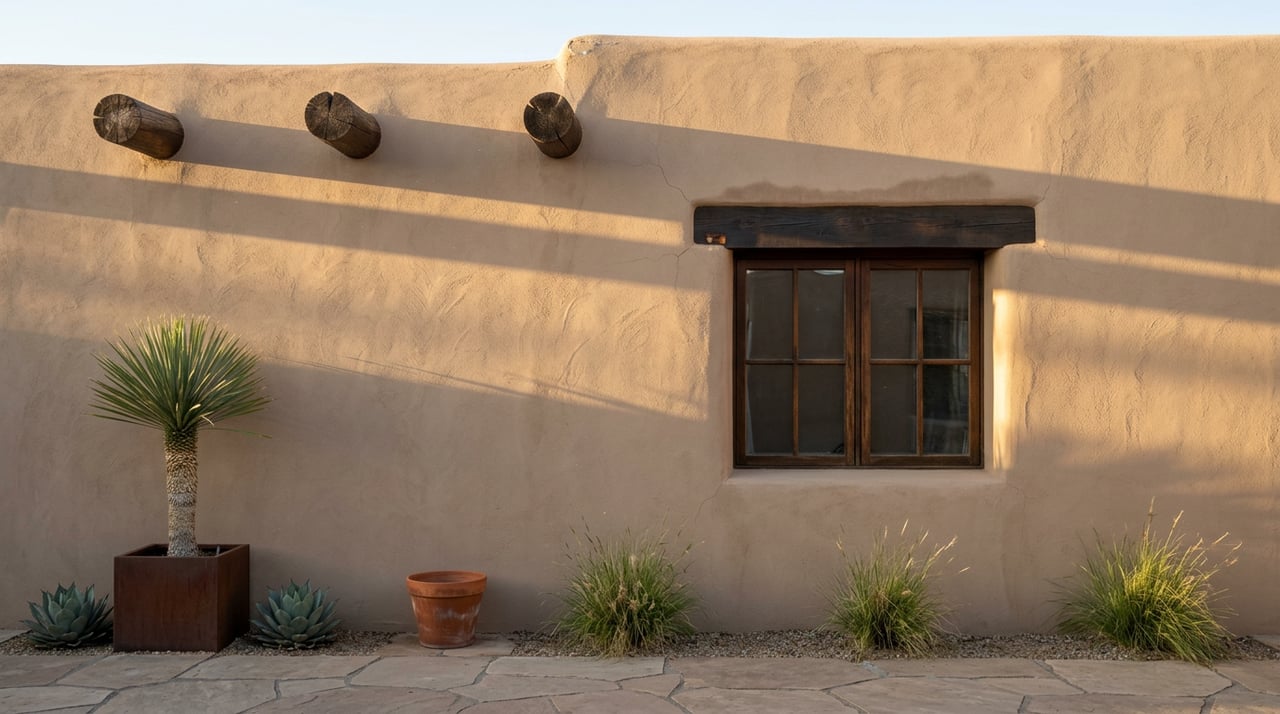
An inspector steps into a Camino del Monte Sol adobe and asks the listing agent a single question before the flashlight comes out: is the home contributing, significant, or non-contributing? The seller has lived there twenty years and has never used those words in that order. The buyer's agent has already pulled the answer from the city, and the answer will shape the next thirty days.
That exchange, or a version of it, plays out often enough on the Eastside that it belongs at the front of any listing conversation. The mechanism that moves an Eastside sale from smooth to renegotiated is rarely the roof or the plaster. It is the paper trail attached to a home's historic status, and whether the seller has it ready before the sign goes in the yard.
Every building inside Santa Fe's Downtown & Eastside Historic District carries one of three designations under Section 14-5.2(C): non-contributing, contributing, or significant. In a historic district each building is designated a status of non-contributing, contributing, and significant depending on its age, historic character and other factors including its importance culturally. Buyers understand, sometimes before sellers do, that this label controls what they can change after closing.
The label is not permanent, and that is the part that catches sellers off guard. A local architect has written about an owner who bought what he understood to be a non-contributing building and later found the Historic Design Review Board recently rejected him because they questioned if his building should be listed as Contributing. He was surprised by this information because he had checked it out before he bought the building. He intentionally didn't buy a Contributing building because he thought it would be too expensive to renovate. Status can be reassessed at the point an application is filed. A buyer's due diligence often forces that reassessment.
A contributing or significant designation constrains the exterior projects most buyers write into their post-close plans. The city's design standards for the district are consistent on the sensitive elements:
A buyer who plans a rooftop deck over the portal, a wider kitchen window facing Acequia Madre, or a solar array visible from the street is not looking at a cosmetic project. They are looking at an application to the Historic Districts Review Board, which the City of Santa Fe Historic Preservation Division confirms meets every second and fourth Tuesday of the month, plus a $75.00 fee for initiating the application and staff review time. If that timeline lands inside a contract's inspection or financing window, the deal changes shape.
The Eastside also holds compound properties that the city evaluates as site systems, not single buildings. Courtyards, secondary structures, and the spaces between them all count. A seller who markets a placita as one house is describing the property differently than the city does, and a buyer's advisor will notice.
Recent HDRB agendas read like a catalogue of what the district considers sensitive. In a single 2025 hearing block, staff took up window replacements and a coyote fence at 412 Camino Cabra, a 624 square foot addition at 532 Calle Corvo requesting an exception to the ten-foot side-facade setback, and a detached garage at 439 Camino del Monte Sol seeking a height exception. Each of these projects was going through the process. The problem for sellers arises when a prior owner completed a similar project and never did.
The moments an inspector or buyer's counsel typically flag on an older Eastside home:
None of these items automatically kills a sale. What they do is transfer the cost of remediation, real or hypothetical, into the buyer's offer. A clean permit file removes that discount before the buyer can apply it.
A plat can carry an easement that has not held water in a lifetime. On the Eastside, that matters. While the majority of acequias west of St. Francis Drive no longer receive water rights, they're still supposed to be protected by easements. In practice, however, this hasn't been the reality. The lateral behind your garden wall may be dry, and it may still be an easement of record.
For a working ditch, the obligation is more concrete. If a property includes acequia rights, those are community-managed irrigation rights with their own rules. Shares may come with assessments, ditch maintenance schedules, and governance by commissioners. The New Mexico Acequia Association is a useful reference for buyers doing homework on your listing, and a seller who can hand over the last few years of assessments, a copy of the ditch bylaws, and a note from the mayordomo saves a week of back-and-forth. If a claim is unclear, records live with the New Mexico Office of the State Engineer.
The citywide numbers as of mid-2026 describe a market that has rebalanced. Redfin's data for the three months ending May 2026 put the Santa Fe median at $525,000, down 7.9 percent year over year, with homes selling in an average of 58 days. Houzeo's March 2026 snapshot showed a sale-to-list ratio of 97.48 percent, 3.4 months of supply, and price reductions on roughly 19 percent of active listings. The Santa Fe Association of Realtors reported the single-family median at $690,850 for its most recent quarter with days on market down 29.3 percent.
Those three numbers describe three different pools of inventory. The Eastside sits above all of them. A recent read on the Downtown and Eastside Historic District put the median sale price near $1.3 million and roughly $759 per square foot with about 63 days on market. The citywide sale-to-list ratio matters less to your listing than the specific question of whether your file supports the price you are asking. Balanced markets reward complete files. Overpriced Eastside homes with unresolved permit gaps sit. Contributing homes with a documented status letter, prior HDRB approvals, and clean disclosures move.
The work below happens before photos, not during inspection.
Does contributing status reduce my price? Not by itself. Buyers who love the Eastside are buying the district's protections. What reduces price is uncertainty about what a buyer can change and whether prior changes were done through channels. A complete file removes both questions.
If I have unpermitted exterior work, do I fix it or disclose it? That depends on the work and the timeline. Cosmetic items that violate a design standard can sometimes receive administrative approval quickly. Structural or additive work often needs a full HDRB hearing on the second or fourth Tuesday cycle. Your broker and, where useful, a preservation-experienced architect can help you decide whether remediation before listing pencils out.
What about the acequia behind my wall? If it is a dry easement of record, disclose it and hand over the plat. If it carries an active share, gather the last few years of assessments and the ditch's bylaws. Buyers respect specificity.
Will an appraiser use standard comps? In the Historic Eastside, adobe and vernacular construction, lot size and shape, site constraints, and preservation rules can affect which comparables the assessor uses. Expect comps to be less standardized than in newer subdivisions, which is why local, like-kind data matters.
Selling a home inside the Downtown and Eastside Historic District rewards preparation more than persuasion. The buyer who is right for your home has read the same standards you have. A file that answers their questions before they ask puts your price at the front of their calculation instead of at the end of it. When you are ready to talk through your property's status, its permit history, and the pricing that follows, Robyn Tyra is happy to sit down with you. Let's Connect.

Robyn Tyra is a seasoned real estate professional with more than 35 years of experience in both real estate sales and title insurance across Northern New Mexico. Deeply connected to the region’s rich history, diverse culture, and breathtaking landscapes, she takes pride in helping clients find their place to call home in Santa Fe and beyond. Known for her dedication to building lasting relationships, Robyn guides clients through every step of the buying or selling process with clear communication, integrity, and a seamless approach. Her greatest reward is seeing clients achieve their real estate goals while embracing the unique lifestyle that Northern New Mexico offers.
📍 123 E Marcy St., #101, Santa Fe, NM 87501
📞 (505) 982-0330


I have spent my career in Northern New Mexico in the real estate industry with over thirty five years in both real estate sales and title insurance. My commitment to you is to make the real estate process of buying and selling as seamless as possible through active communication and listening. We will work together every step of the way to reach your real estate goals.