Counter Culture Opened Before Santa Fe Decided What the Railyard Should Be
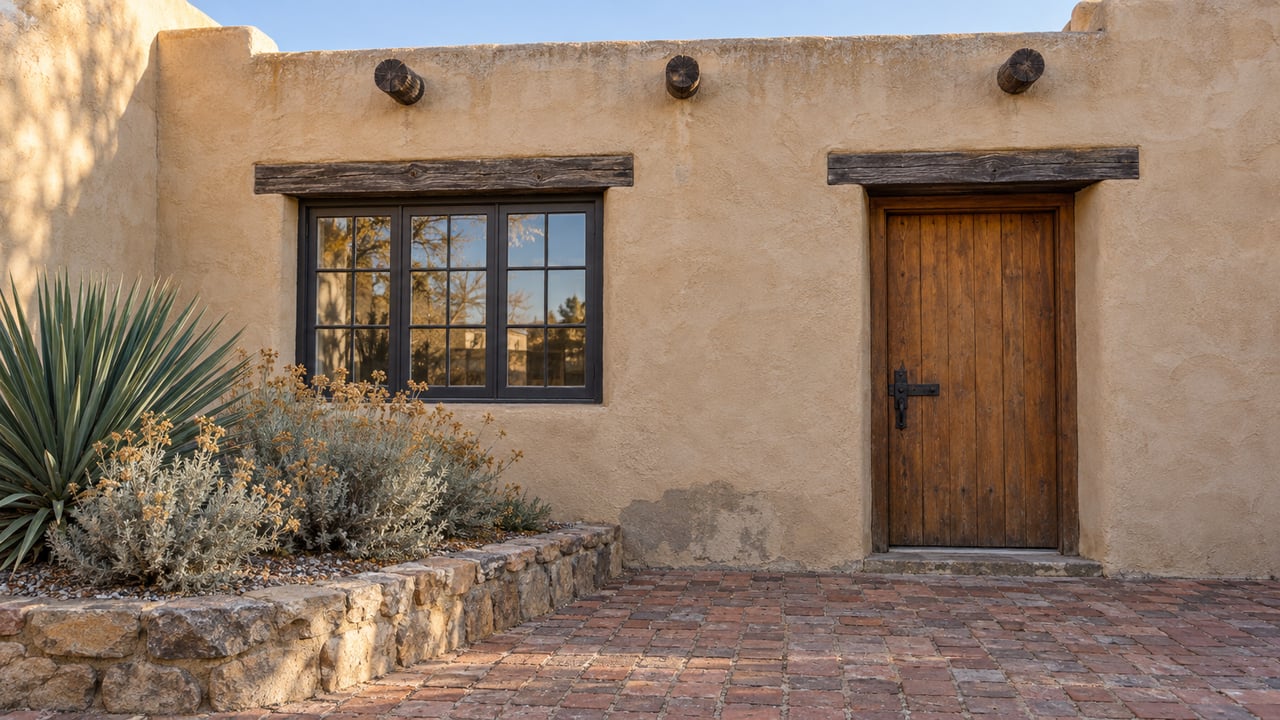
In October 1996, Jason Aufrichtig and Elaine Pirone opened a café at 930 Baca Street. This south end of the rail yard had been built for coal and fuel storage, warehouses and light industry, and its metal warehouses date from an era of light industry, stone yards and art production. In the Santa Fe Reporter's 30th-anniversary profile, the restaurant was "just about the only thing around" when it opened.
That December, the City of Santa Fe asked residents to vote on what they wanted on the Railyard. They asked for local business opportunities, an arts and cultural district, protection for the surrounding neighborhoods, and a way to keep the yard's "rugged, gritty" look, according to the Santa Fe Railyard Community Corporation's history.
Counter Culture turned 30 last month. Over those three decades, the city wrote that wish list into a master plan, and the plan describes the café pretty closely. The Baca Railyard that grew up around it kept the same scale: small owners, reused buildings and a working street.
Before 1996, the plans for this ground went the other way. In 1991, Catellus Development Corporation, the development arm of the Atchison, Topeka and Santa Fe Railway, released a plan to remove the rails and most of the existing buildings and put up 1.2 million square feet of new buildings as tall as six stories. The city's Metropolitan Redevelopment Commission and the City Council rejected it in 1992. In 1995 the city bought the 50-acre Railyard, with bridge financing from the Trust for Public Land.
Baca Street had its own near miss. The Santa Fe New Mexican reported that Catellus wanted to build a Smith's grocery store there, and the City Council turned that down too. In 1994, two years before Counter Culture opened, a builder named Alan Burrus began converting buildings at the back of Baca Street into living spaces for artists. He held a month-to-month lease from the railroad, and it took him seven or eight years to get a lease from the city. He named the place at 931 Shoofly Street the Twisted Cow Compound, a rough translation of Campo de la Vaca Torcida, the name locals used for Baca Street where it winds down toward the acequia.
Aufrichtig got to Baca Street by a similar side road. The Reporter traces his path through kitchen jobs at Santacafé, Pranzo and Pasqual's, then a food delivery business he started with Pirone, then a commercial kitchen on Agua Fría Street across from what is now Tumbleroot Brewery & Distillery, along with a catering company. The café came after all of that.
After the December 1996 vote came a four-week design process in February 1997. The Railyard Community Corporation says more than 6,000 Santa Feans gave input, and the Santa Fe Reporter printed the resulting Community Plan so every household could get a copy. The City Council approved that plan unanimously in spring 1997.
When the formal Railyard Master Plan passed in February 2002, it kept the "rugged, gritty" look and encouraged local businesses and nonprofits. For the Baca section in particular, the plan kept the warehouse and light-industrial uses. It called for tenants with "a diverse scale and range of uses from live-work, light industrial, arts production, community uses and services," as the New Mexican quoted it.
Counter Culture already looked like that: a locally owned business in a rail-side building that had made no effort to look polished. In the Reporter's anniversary piece, Aufrichtig describes the original idea in one line:
"Our day-one manifesto was like, we wanted a good cup of coffee, a good plate of food and good people. That's truly all the plan was. We didn't stray from it."
The changes at Counter Culture have been small. The café takes credit cards now, which the Reporter calls a post-pandemic move after years as a cash-only place, and dinner service ended during the pandemic. According to the café's website, it is open seven days a week from 8 a.m. to 3 p.m., with breakfast all day plus beer and wine.
The menu still has New Mexican dishes, sandwiches, breakfast standards and salads, plus the large cinnamon roll. The French toast is made from a day-old cinnamon roll. Aufrichtig still rotates specials based on his travels, and a recent motorcycle trip to Thailand led to a coconut salmon soup. The Reporter also says the room is almost always full, and that parking proves it.
"This is basically spot-on what I wanted it to be," Aufrichtig told the Reporter, adding that it has become "its own little landmark in Santa Fe."
Baca Street came first in the build-out. In 2006 the city started the first phase of infrastructure construction in the 12-acre Baca Street section, a $4.6 million project finished in 2007, before the North Railyard got its streets and utilities.
Then the timing went badly. The Railyard grand opening in September 2008 drew 20,000 people, with 92 percent of its land parcels leased. During the 2008 to 2013 recession, commercial real estate loans nearly disappeared, and the leased share fell to 72 percent.
What did get built on Baca in those years was small. Six parcels, about 9 percent of the Baca Railyard's land, were leased during the recession. They became residential condominiums, an artist studio, an architect's live/work office, an art storage and handling facility, and an expanded furniture consignment store. That is the kind of mixed, working-scale use the 2002 plan called for, built by individual owners.
The newer projects followed the same pattern. Trailhead, on Shoofly Street, is a four-building compound of homes, short stays, studios and shops built by landscape architect Solange Serquis and builder Andres Paglayan, who kept a 1949 warehouse and reworked it. Pie Projects, a contemporary art space founded in 2021 by Alina Borsa and Devendra Contractor, is in a Shoofly Street building designed by DNCA, according to Tourism Santa Fe. In 1996 none of these neighbors were there. Today they all share the café's basic approach of keeping the existing building, keeping the owner on site and keeping the scale small.
The Baca Railyard is compact enough to walk in the time it takes for a table to open at Counter Culture. These stops are a few minutes apart, mostly on Shoofly Street and Flagman Way:
The Railyard Community Corporation's tenant directory lists the rest of the Baca businesses, including Salon del Mar and Undisputed Fitness, both on Flagman Way.
Before Santa Fe voted on what the Railyard should become, Counter Culture was already serving coffee and food on Baca Street. The street around it has filled in, and the café still opens at 8 a.m. seven days a week.
Robyn has watched the Railyard grow over more than 35 years of Santa Fe real estate, and she enjoys hearing which corner of Baca Street people claimed first. If you'd like to talk about the Railyard, its history or what's changing there, Robyn Tyra would be glad to hear from you. Let's Connect.
Robyn Tyra is a seasoned real estate professional with more than 35 years of experience in both real estate sales and title insurance across Northern New Mexico. Deeply connected to the region’s rich history, diverse culture, and breathtaking landscapes, she takes pride in helping clients find their place to call home in Santa Fe and beyond. Known for her dedication to building lasting relationships, Robyn guides clients through every step of the buying or selling process with clear communication, integrity, and a seamless approach. Her greatest reward is seeing clients achieve their real estate goals while embracing the unique lifestyle that Northern New Mexico offers.
📍 123 E Marcy St., #101, Santa Fe, NM 87501
📞 (505) 982-0330


I have spent my career in Northern New Mexico in the real estate industry with over thirty five years in both real estate sales and title insurance. My commitment to you is to make the real estate process of buying and selling as seamless as possible through active communication and listening. We will work together every step of the way to reach your real estate goals.