South Capitol Isn't One Market. It's Two, Split by a Line Most Buyers Never See.
Stand at the corner of Old Santa Fe Trail and Houghton Street and you're in South Capitol. Walk two blocks west past Don Cubero and you're still in South Capitol. But you've crossed something that matters more than the street sign suggests: the boundary of the Don Gaspar Historic District, one of Santa Fe's five federally recognized historic districts, where the rules for touching your own house change completely.
Most portal listings for South Capitol quote a single price range, as if the neighborhood behaves like one market. It doesn't. And the reason has less to do with square footage or curb appeal than with which side of an often-invisible line a given address happens to sit on.
Search for South Capitol home prices in 2026 and you'll find a wide spread, roughly $400,000 to $1.5 million depending on the source, with one widely cited median sitting closer to $575,000 to $675,000. Compare that to the Historic Eastside, where recent data put the median sale price near $1.3 million and median listing price closer to $2.35 million, at roughly $759 per square foot with homes spending about 63 days on market as of late spring 2026.
The gap between those two neighborhoods gets explained away as a simple story: Eastside is older, closer to the Plaza, more prestigious. All true. But that story misses something happening inside South Capitol's own borders. Pull listings specifically from within the Don Gaspar Historic District core and the range shifts hard toward the Eastside's end of the spectrum, with recent three-bedroom bungalows on smaller lots priced from around $795,000 up to $1.6 million on quarter-acre parcels. That's not a rounding error. That's a different market wearing the same neighborhood name.
The Don Gaspar Historic District was listed on the National Register of Historic Places in 1983, reference number 83001629. The Wikipedia entry puts the boundaries at Paseo de Peralta on the north, Old Santa Fe Trail on the east, Houghton Street on the south, and Don Cubero on the west, roughly 103 acres of tree-lined grid immediately south of the State Capitol. The 1983 survey documented 455 structures within that footprint, with 278 identified as contributing to the district's historic character.
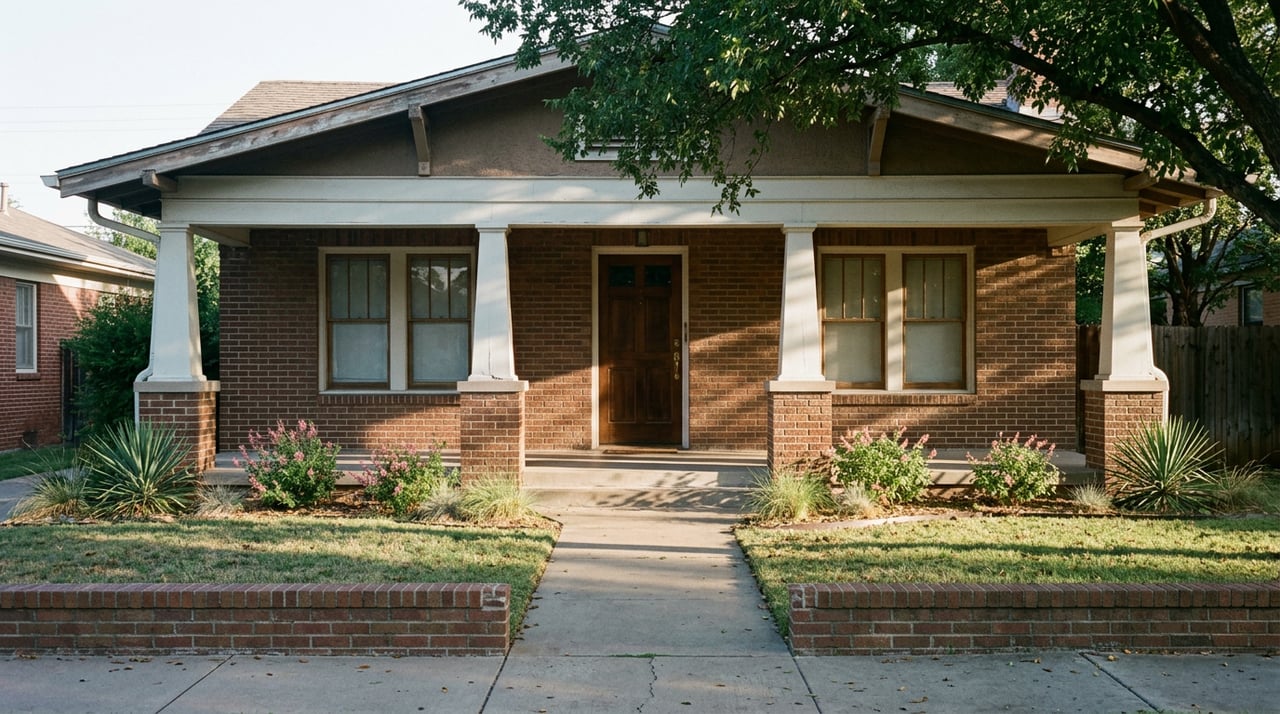
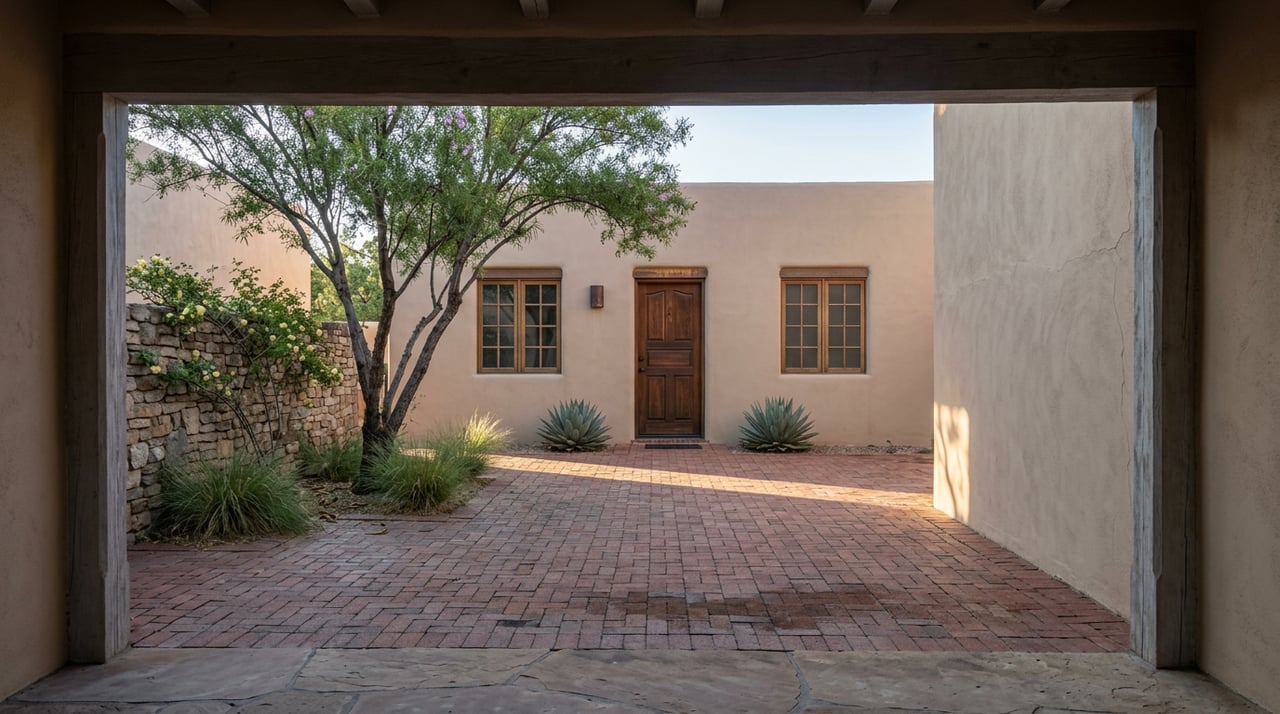
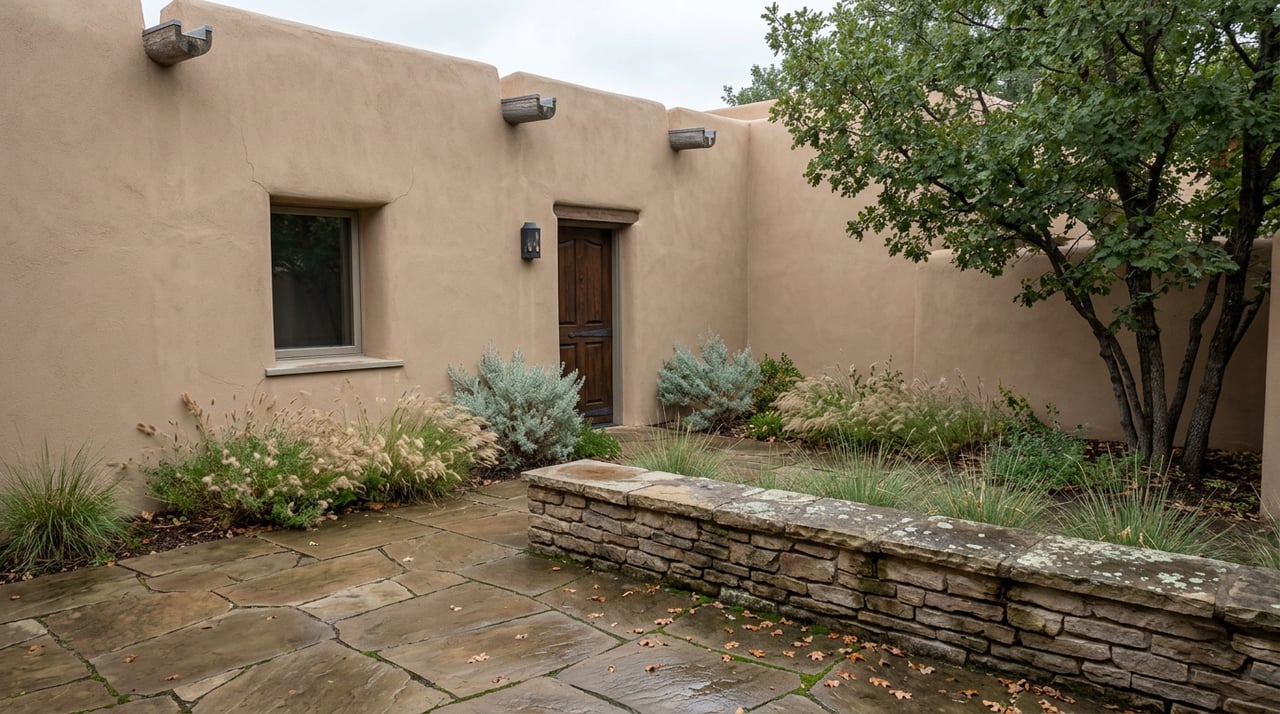
The building stock inside those lines is genuinely unusual for Santa Fe. Alongside the adobe and Pueblo Revival homes you'd expect, Don Gaspar carries a real concentration of Craftsman bungalows, Territorial brick houses, and even late-period Victorian design, a legacy of the professional and merchant class who settled here after the railroad arrived. Some of the oldest structures include a distinctive local material: pen tile, a structural tile manufactured by inmates at the New Mexico Penitentiary, which once stood near the district's southwest edge.
Outside those four streets, you're still in South Capitol by every marketing definition, but you're not inside the federally listed district, and that distinction is the whole point.
Inside the boundary, exterior work on your house isn't a private decision. The City of Santa Fe's Historic Preservation Division requires a Historic Districts Application before most modifications proceed, with a $75 fee to initiate the process. Depending on scope, a project either clears through administrative staff approval or advances to the Historic Districts Review Board, which meets the second and fourth Tuesday of most months. The city maintains five historic districts citywide, and Don Gaspar is one of them, carrying the same procedural weight as the Downtown and Eastside district that anchors the Historic Eastside's premium.
Outside the boundary, in the rest of South Capitol, an owner can typically repaint, reroof, or add a room without that layer of review. Same neighborhood name. Genuinely different transaction math.
If this sounds like an abstraction, look at what's happening on Don Gaspar Avenue right now. The State of New Mexico has spent years pursuing a 163,000-square-foot executive office building on the block between South Capitol Street and Don Gaspar Avenue, intended to house the Department of Finance and Administration, the Secretary of State's Office, the State Treasurer's Office, the Office of the State Auditor, and the Higher Education Department, according to reporting from the Santa Fe New Mexican.
The project has moved through the Historic Districts Review Board in stages since 2024, and the sticking point has been four contributing casitas the state wants to clear for a 545-space underground parking garage. At a late-2025 public meeting, the board approved demolition of a couple of adjacent buildings but held the line on the casitas. Jordan Young, a South Capitol resident who spoke at that meeting, dismissed concerns about a proposed memorial exhibit for the buildings:
"Those buildings are crumbling. They're very unremarkable."
Not everyone agreed the fight was about the buildings themselves. Anthony Guida, a local architect and former historic board member, pushed for a broader conversation about what the ordinance is actually for, arguing the review process shouldn't exist "just to prevent development from happening in our town." Later coverage from the same paper indicates the board eventually reversed course on the casitas, with demolition work reported underway.
Whatever the final outcome, the sequence itself makes the point. A property sitting inside this boundary isn't just subject to a design guideline on paper. It can become the actual subject of a multi-year public hearing process, with named neighbors testifying and architects arguing over precedent, while a nearly identical house two blocks outside the line changes hands and gets renovated without anyone outside the closing table ever hearing about it.
The instinct is to assume review friction should discount a home. More paperwork, slower timeline, higher carrying cost during a renovation. Lower price, right?
The data says otherwise. Homes inside the Don Gaspar Historic District are pricing at or above the top of South Capitol's overall range, not below it, and the same pattern holds for the Eastside relative to the rest of downtown. The restriction isn't functioning as a tax on value. It's functioning as a guarantee of scarcity. A buyer who wants an authentic pre-1936 Craftsman bungalow with pen tile construction can't manufacture one outside the boundary. The review board that slows down a kitchen remodel is the same body that keeps the next lot from becoming five townhomes. That tradeoff is worth paying for, and the market is pricing it that way.
| Area | What you'll pay (2026 data) | What governs changes |
|---|---|---|
| South Capitol, broadly | $400,000 to $1.5 million range; median near $575,000 to $675,000 | Depends entirely on the specific parcel |
| Don Gaspar Historic District | $795,000 to $1.6 million for 3-bedroom homes | Historic Districts Application required; possible HDRB review |
| Historic Eastside | ~$1.3 million median sale / $2.35 million median list, spring 2026 | Downtown & Eastside Historic District, HDRB review, tighter facade rules |
Before assuming a South Capitol listing will renovate the way you picture it, or assuming the historic tag is a discount signal, check which side of Paseo de Peralta, Old Santa Fe Trail, Houghton Street, and Don Cubero the property actually falls on. The Historic Preservation Division maintains a GIS layer showing historic district boundaries and individual building status, and it's worth confirming before you write an offer contingent on exterior changes.
Does every home inside Don Gaspar require board approval for anything I want to change? No. Minor maintenance and small alterations often qualify for administrative staff approval rather than a full HDRB hearing. The distinction depends on scope and on whether the structure is classified as significant, contributing, or noncontributing.
How do I confirm whether a specific address sits inside the boundary? The city's GIS mapping tool lets you toggle historic district layers and building status directly, and Historic Preservation Division staff can confirm status for a given parcel before you're under contract.
Does being inside the district always mean a higher price? Not automatically, but the pattern in current listings leans that direction here, likely because the review process protects the very character buyers are paying for in the first place.
If you're weighing a South Capitol property and want to know exactly what you're buying, on both sides of that line, Robyn Tyra can walk the boundary with you before you make an offer. Let's Connect.

Robyn Tyra is a seasoned real estate professional with more than 35 years of experience in both real estate sales and title insurance across Northern New Mexico. Deeply connected to the region’s rich history, diverse culture, and breathtaking landscapes, she takes pride in helping clients find their place to call home in Santa Fe and beyond. Known for her dedication to building lasting relationships, Robyn guides clients through every step of the buying or selling process with clear communication, integrity, and a seamless approach. Her greatest reward is seeing clients achieve their real estate goals while embracing the unique lifestyle that Northern New Mexico offers.
📍 123 E Marcy St., #101, Santa Fe, NM 87501
📞 (505) 982-0330


I have spent my career in Northern New Mexico in the real estate industry with over thirty five years in both real estate sales and title insurance. My commitment to you is to make the real estate process of buying and selling as seamless as possible through active communication and listening. We will work together every step of the way to reach your real estate goals.