The Rose Garden South Capitol Keeps Alive By Hand
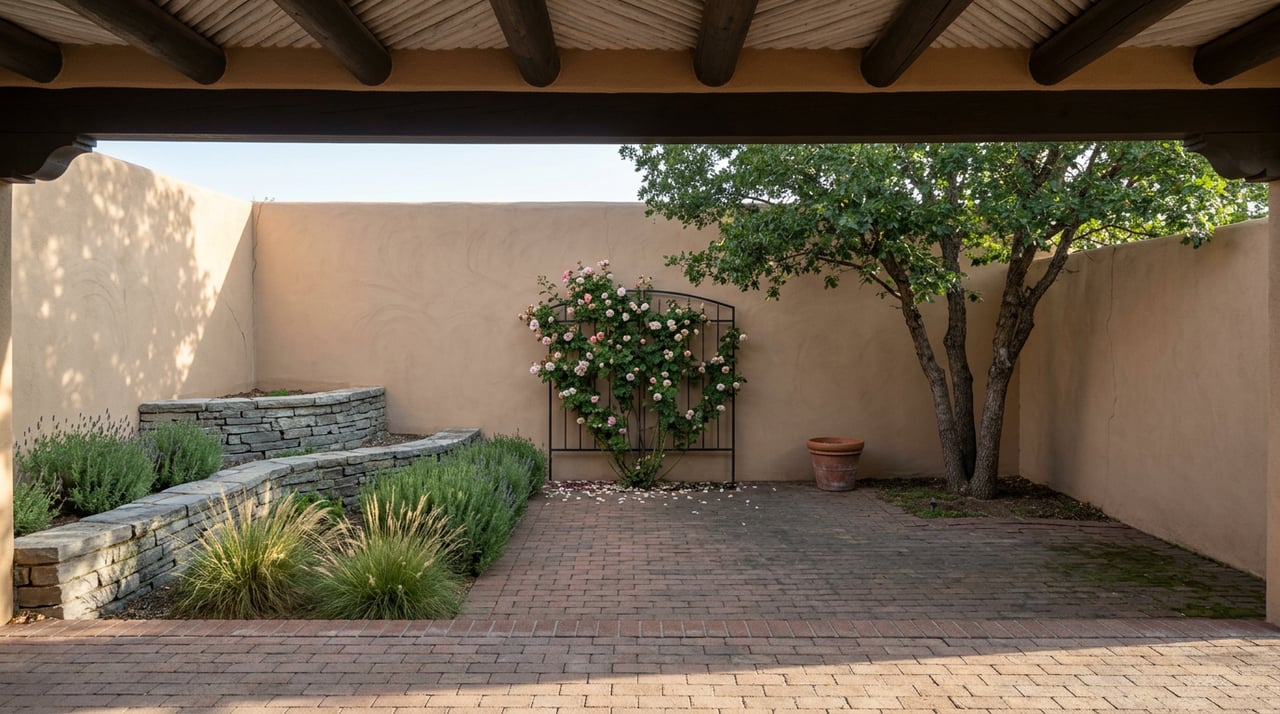
Walk the corner of Cordova Road and Galisteo Street most mornings and you will find the same small cast of regulars: a woman with two leashed dogs who stops at the same bench every time, a man doing slow tai chi forms near the fountain, someone deadheading a rose bush who does not work for the city. None of them are being paid to be there. That last detail matters more than it sounds like it should, because it is the whole story of how this park came to exist in the first place.
In the 1930s, the land at that corner was a nuisance. A local citizen named Nat Stern had given the sloping tract to the city, but with nothing done to it, the lot filled with tumbleweeds and loose dirt that blew into the new houses being built around it. Residents complained for years. The city, with no money for upkeep, did nothing. What changed the corner from a neighborhood irritant into one of Santa Fe's most photographed small parks was not a budget line item. It was a handful of private citizens who decided to fix it themselves, and a habit of doing exactly that which has kept the place alive for almost seventy years since.
The turning point came in 1957. Joe Clark, who ran the New Mexico State Parks and Recreation Commission at the time, was tired of looking at the mess. He organized a group of rose enthusiasts into the newly formed Santa Fe Rose Society, became its first president, and spent more than a year petitioning the City Council before they agreed to let the society plant a garden there and formally designate the land a park.
Clark then recruited Harvey Cornell, a landscape architect who had recently retired as the National Park Service's chief landscape architect for the eastern half of the country. Cornell had lived in Santa Fe for years before his work took him to Philadelphia, and he came back to draw up a grading plan that would keep runoff from washing out the rose beds, then laid out the lawns and trees that still shape the park today. Garden clubs planted irises at the south end. Cornell designed a tiered stone rose garden at the north end, where the Santa Fe Rose Society put in more than 800 bushes. Cornell's wife, Herdis, added bush roses of her own and paid for the fountain that still anchors the northern terrace. The first roses planted along Galisteo Street were Blaze climbers. Most of the original identification tags are long gone, so nobody today can say with certainty which varieties survive from that first planting. The park was named for Cornell after he died, in recognition of what he built here for free.
Here is the part that does not show up on the postcard version of this story. The Santa Fe Rose Society still runs the garden, but it is a small and aging club, and in 2010 it brought in the Santa Fe Extension Master Gardeners to help carry the workload. Together the two groups now maintain roughly 400 rose plants, down from the original 800, because there simply are not enough volunteer hands left to manage more than that.
The people doing the work have names. Jack and Juanita Ortega have been active in the Rose Society since the 1980s. Katherine O'Brien works alongside them as a certified rosarian. Between them they run rose clinics for the public, teach organic feeding and pruning techniques built up over decades of soil work, and each year select blooms from local gardens to judge at the Rose Society's annual show at De Vargas Center. What keeps the garden going is not a maintenance contract. It is a short list of specific people who show up.
A few things worth knowing if you walk the park regularly:
The rose garden is not the only piece of neighborhood infrastructure here that started as one person's project rather than an institution's plan. A few blocks away, Ohori's Coffee opened in 1984 as a single drive-through window near the State Capitol building. Susan Ohori had trained in Berkeley under Alfred Peet, the roaster whose students went on to found both Peet's and Starbucks, and she brought that small-batch approach to Santa Fe when there was nowhere else in the state doing it. Ohori's became New Mexico's first specialty coffee roaster and remains its longest continuously operating one.
The business has changed hands twice since, first to the Ayers family, a group of local jewelers and craftspeople, in 2001, and then to Tai and Sam Brinegar in 2017. Neither transition came with outside investment or a franchise model. It is the same pattern as the rose garden: something built slowly by hand, kept alive by whoever happens to be paying attention at the time, rather than propped up by a larger institutional plan. Compare that to the Railyard a short walk to the west, where the city itself bought fifty acres in 1995 and executed a master plan with public funding behind it. South Capitol's version of civic infrastructure has never worked that way. It has always been closer to volunteer labor and one roaster's stubbornness than to a five-year plan.
None of this is abstract if you actually live on these streets. A typical week tends to follow the same rough loop. Coffee starts at Ohori's, whose current location on South St. Francis Drive still carries the same dark-roast lineup the shop built its name on, from a deeply developed Italian roast through a balanced French and several lighter profiles. The evening dog walk usually ends at Cornell Rose Park, whether the roses happen to be at their peak or past it, because the shade and the fountain make it a good stopping point regardless of season. Errands often route through De Vargas Center, which becomes something more than a shopping center every year when the Rose Society sets up its judged show there. Dinner, when it is not a weeknight at home, tends to land at Restaurant Martín, known locally for its garden patio and a seasonal New American menu, or at Clafoutis, the French bakery that has built a reputation as one of the busiest breakfast and lunch spots in town.
None of these places are new. That is close to the point. The neighborhood's daily rhythm runs through a small set of long-standing, independently run businesses and one publicly maintained garden that survives on volunteer labor rather than city funding. It is a quieter kind of continuity than the Railyard's redevelopment story or the Eastside's museum expansions, but it has held up for close to seventy years without much outside help.
The honest way to read the rose count, 400 plants against an original 800, is not as decline for its own sake. It is a signal about capacity. The Rose Society and the Master Gardeners have scaled the garden to match the hands available to tend it, and that number has been shrinking as the club's membership ages. If nobody new joins in the next decade, the honest expectation is that the garden gets smaller again, not that it disappears. The corner will likely always have a park on it. What is not guaranteed is that it stays the same size, or keeps the same variety of roses, without someone deciding to pick up where the Ortegas and O'Brien eventually step back.
That is worth knowing if you already call this neighborhood home, because it means the park is not a fixed amenity the way a paved trail or a streetlight is. It is a living project that depends on the same kind of quiet, unpaid attention that built it in 1957. Whether that attention keeps showing up is an open question, and one that has more to do with who moves onto these blocks next than with any city budget cycle.
If you are thinking about South Capitol, whether you are already walking these streets or picturing what a week here might look like, Robyn Tyra knows this neighborhood well enough to talk about more than square footage. Let's Connect.
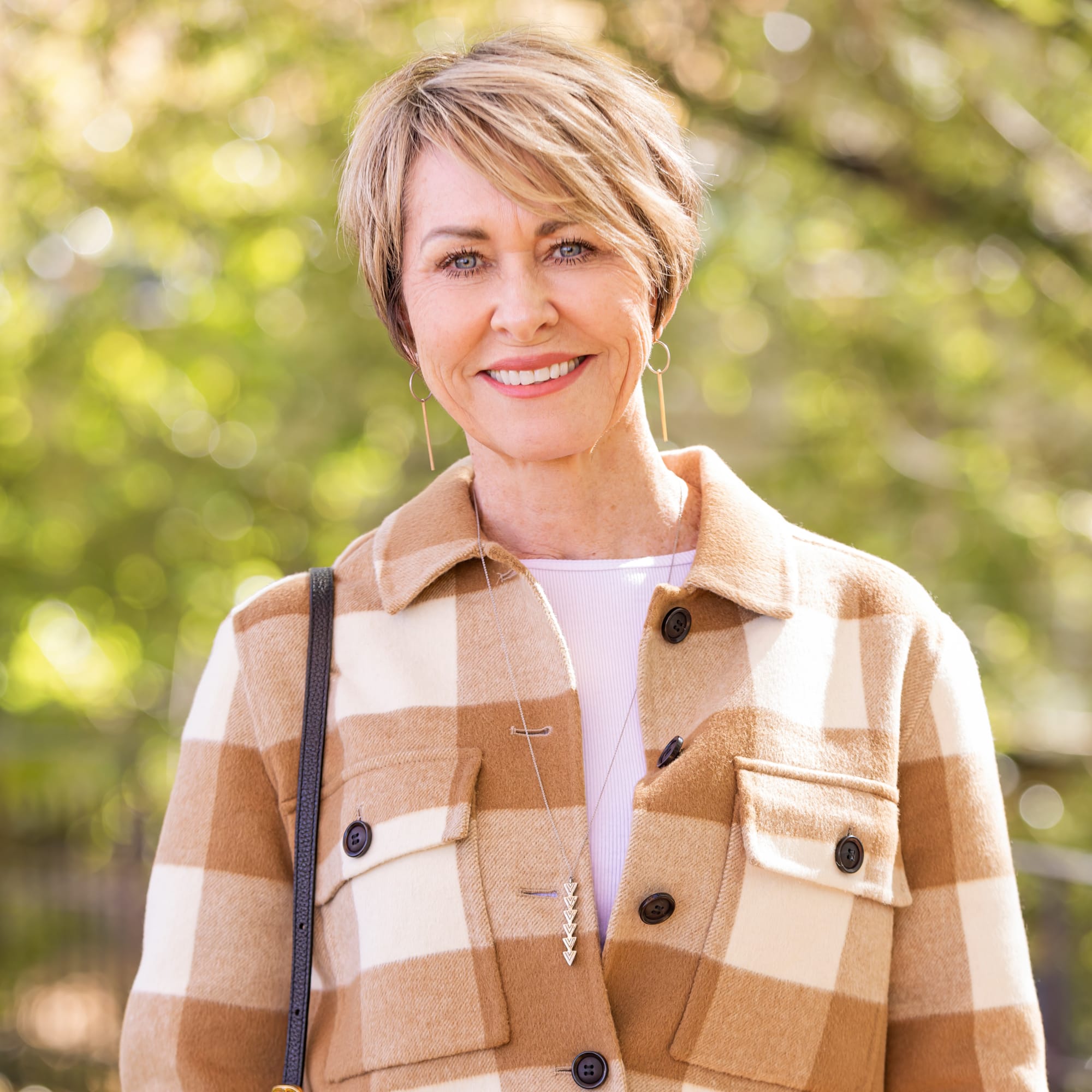
Robyn Tyra is a seasoned real estate professional with more than 35 years of experience in both real estate sales and title insurance across Northern New Mexico. Deeply connected to the region’s rich history, diverse culture, and breathtaking landscapes, she takes pride in helping clients find their place to call home in Santa Fe and beyond. Known for her dedication to building lasting relationships, Robyn guides clients through every step of the buying or selling process with clear communication, integrity, and a seamless approach. Her greatest reward is seeing clients achieve their real estate goals while embracing the unique lifestyle that Northern New Mexico offers.
📍 123 E Marcy St., #101, Santa Fe, NM 87501
📞 (505) 982-0330


I have spent my career in Northern New Mexico in the real estate industry with over thirty five years in both real estate sales and title insurance. My commitment to you is to make the real estate process of buying and selling as seamless as possible through active communication and listening. We will work together every step of the way to reach your real estate goals.