Buying A Live/Work Loft Near The Railyard: The Question The Listing Photos Won't Answer
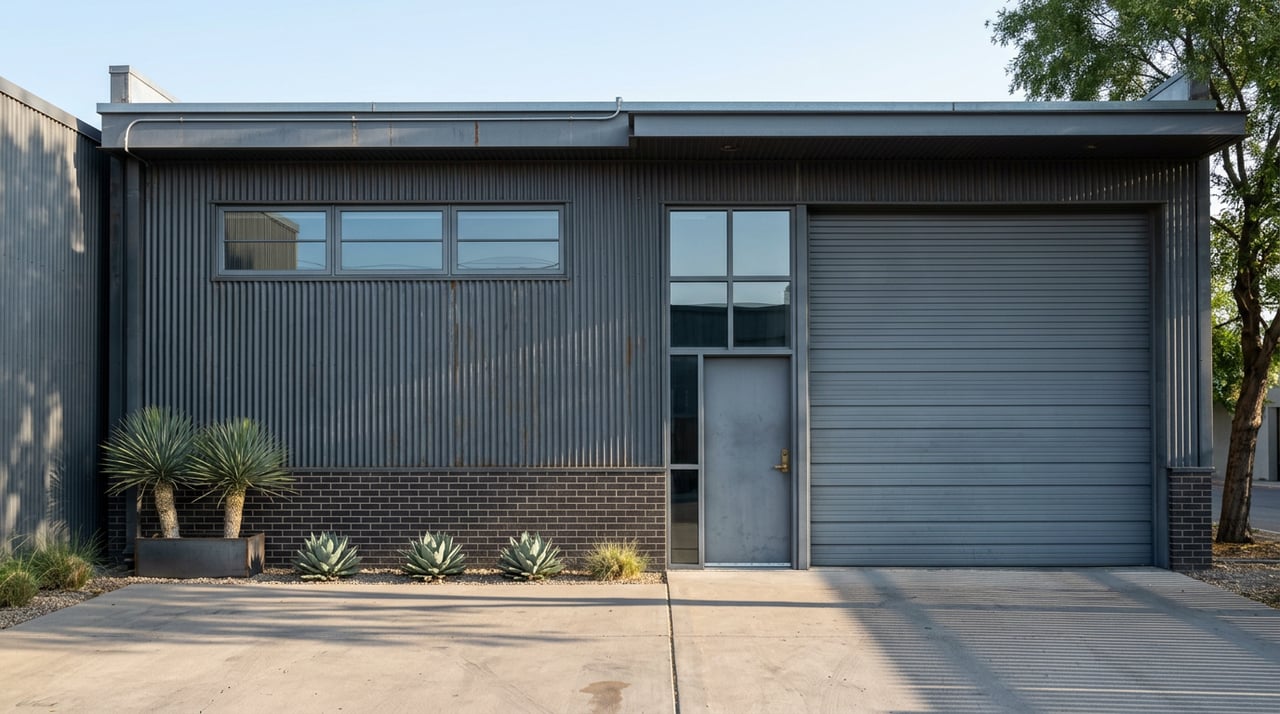
How much of your future loft counts as work space? It sounds like a design question, something you'd sketch out with a tape measure after closing. In the blocks around Santa Fe's Railyard, it's actually the number your lender asks first, and it can decide whether you get a standard 30-year mortgage or end up shopping for a commercial loan with a bigger down payment and a shorter clock.
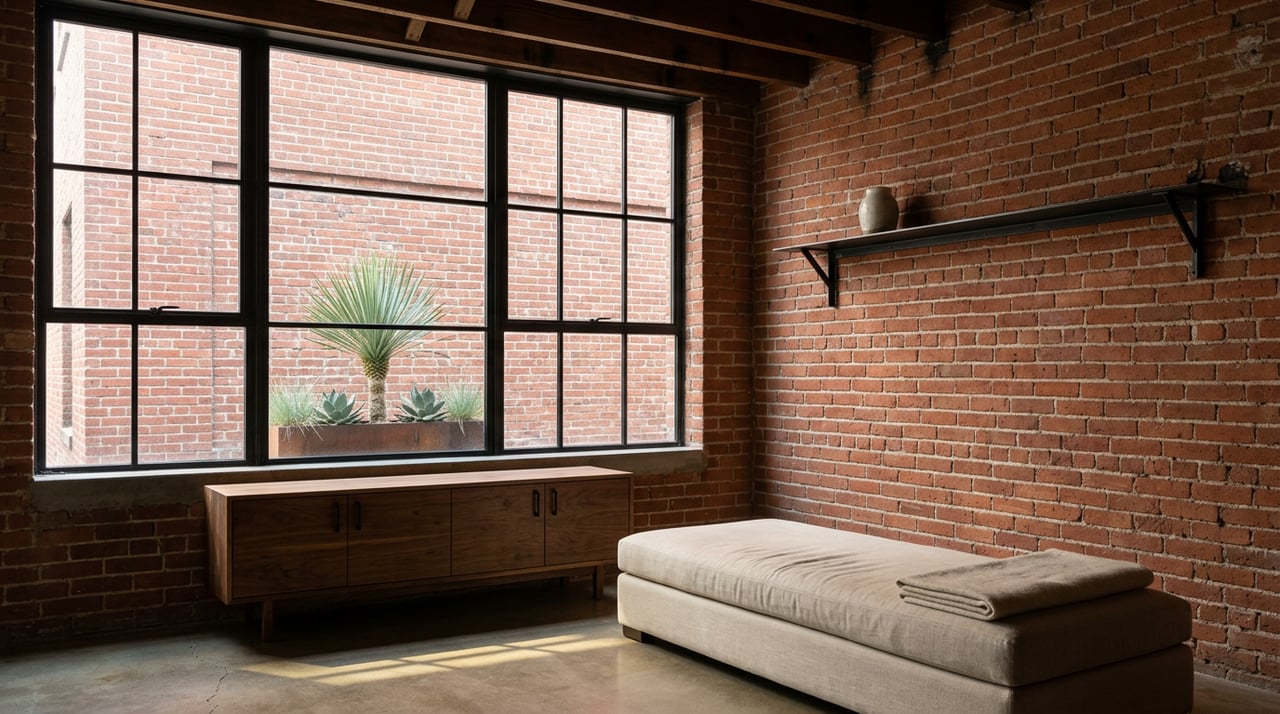
Walk through a unit at Pacheco Street Lofts on a Saturday morning, with the Farmers Market a five-minute stroll away and the Rail Runner sliding past the courtyard, and none of that surfaces. What you see is polished concrete, tall windows framing views toward the Sangre de Cristos, and a floor plan that could just as easily be a painter's studio or a family's first home in town. What you don't see, until your lender's underwriter asks for it, is the percentage split between "residential" and "work" square footage written into the property's own history, and whether the parcel under your feet is privately owned or part of a City of Santa Fe ground lease that runs through 2030. Two buildings a few blocks apart, both marketed under the same "Railyard living" language, can answer those questions completely differently.
The Santa Fe Railyard Community Corporation, the nonprofit that has managed the district's commercial redevelopment since the early 2000s, master leases a defined set of parcels from the City of Santa Fe. That lease and management agreement was extended in 2011 through 2030, with annual rent to the city running between $500,000 and $1.2 million, money that funds 100 percent of the district's $18.9 million infrastructure cost tied to the original Railyard buildout. Buildings developed under that structure, including the Market Station complex, the Twisted Cow Compound, and Railyard Flats, sit on land the city still technically owns.
Pacheco Street Lofts does not. According to the Urban Land Institute's case study of the project, the 15 two- and three-story live/work condominiums sit in what the case study calls a transitional zone south of the redeveloping Railyard, on land zoned for three-story, multifamily, mixed-use development, built and sold outright by Enterprise Builders Corporation starting in 2006. A few blocks over, The Lofts at Marquez Place carries its own explicit zoning label, Residential/Commercial/live-work/multi-use, on a listing that markets the same walk to Whole Foods, Trader Joe's, and the Rail Runner. Neither building sits under the SFRCC's city lease. Both get folded into casual "Railyard" real estate talk anyway.
That distinction matters before you ever get to financing. If your unit sits on a City of Santa Fe ground lease parcel, your ownership interest and your lender's collateral position look different than they would on a fee-simple lot a few streets away. Ask your agent and title company, in writing, whether the specific parcel you're buying falls under the SFRCC master lease or was conveyed outright. It is a five-minute question that most listing descriptions never raise.
Once you've confirmed how the land itself is held, the next number is the one baked into the unit's actual use: how much of the square footage is residential versus commercial. Fannie Mae's own underwriting guidelines generally won't purchase a loan secured by a property where commercial use exceeds 25 percent of total square footage, even when the owner lives there full time. Cross that line and you're not shopping for a standard 30-year fixed rate anymore. You're shopping for a portfolio lender or a commercial loan, often with a 20 to 30 percent down payment instead of a conventional minimum, and underwriting that looks at income and use documentation the way a small business loan application would.
Even under that 25 percent threshold, a live/work unit typically needs an appraiser certified for both residential and commercial valuation, someone who can separately assess the living space and the work space and then reconcile the two into a single number. That kind of dual-certified appraisal commonly runs $800 to $2,000 or more, well above the $400 to $600 a standard single-family appraisal costs, and it takes longer to schedule because fewer appraisers in any market carry both certifications.
Price comparisons get harder here too. A one-bedroom loft at Pacheco Street Lofts sold in September 2019 for $240,000, about 3 percent below its $248,000 asking price. Run that same address through an automated online valuation today and you'll see a number well north of $380,000, generated entirely from algorithmic comps. No automated model accounts for whether that unit's work-space percentage would trip Fannie Mae's threshold or whether a buyer today would need a commercial appraiser rather than a standard one. In a building type this specific, the actual appraisal is doing work a Zestimate simply cannot.
Pacheco Street Lofts is governed by its own nonprofit condo association, Pacheco Street Lofts Association, Inc., incorporated in New Mexico in 2007 under the state's condominium statute. That's a normal structure for a 15-unit building, but it means the rules governing what you can and can't do with a live/work unit live inside that association's bylaws and covenants, not in city zoning code. Before writing an offer on any live/work property in this corridor, ask for:
A small association with a business-purpose non-profit structure, like Pacheco Street Lofts Association, can amend its rules more easily than a large HOA with hundreds of units. That's not a flaw, but it is a reason to read recent minutes rather than assume the covenants you're handed at closing will look the same in three years.
Before Pacheco Street Lofts sold a single unit, its own construction ran into New Mexico's Solar Rights Act and the 1983 Solar Recordation Act, when a neighboring property owner sued over the project's three-story height, arguing it interfered with a recorded solar collection right. According to the ULI case study, the dispute delayed the project and added roughly 2 percent to total development costs before Enterprise Builders completed the buildings in 2007.
That fight predates almost every current listing near the rail corridor, but the underlying law hasn't gone anywhere. If you're evaluating a live/work unit with an eye toward future additions, or you're weighing how much undeveloped land nearby might change your light and views, it is worth asking whether any adjacent parcel has a recorded solar right on file. It is the kind of question a longtime local title background surfaces quickly and a quick listing scroll never will.
Does buying near the Railyard mean I'm leasing land from the city? Only if your specific parcel falls under the Santa Fe Railyard Community Corporation's master lease, which covers a defined set of commercial-zoned parcels through 2030. Many nearby residential and live/work buildings, including Pacheco Street Lofts, are privately owned outright. Confirm which applies to your unit before assuming either answer.
Can I get a standard mortgage on a live/work loft if I only plan to live there? Sometimes, but the deciding factor is the documented use split in the property's own records, not your personal intentions. If the unit's condo declaration or prior use pushes commercial square footage above roughly 25 percent, most conventional lenders will steer you toward a portfolio or commercial product regardless of how you plan to use the space.
Is a solar rights dispute something I should worry about as a buyer, not just a builder? It matters most if you're planning an addition, a second story, or evaluating how a currently empty adjacent lot might get developed. Recorded solar rights under New Mexico law can limit what a neighbor is allowed to build near you, and what you're allowed to build near them.
If you're weighing a live/work loft or a mixed-use condo anywhere near the Railyard, the paperwork underneath the property matters as much as the finish work inside it. Robyn Tyra has spent more than 35 years in Santa Fe real estate and title work, and knows which questions to ask before you're three weeks into a contract and discovering the answer the hard way. Let's Connect and walk through the specific building you have in mind.

Robyn Tyra is a seasoned real estate professional with more than 35 years of experience in both real estate sales and title insurance across Northern New Mexico. Deeply connected to the region’s rich history, diverse culture, and breathtaking landscapes, she takes pride in helping clients find their place to call home in Santa Fe and beyond. Known for her dedication to building lasting relationships, Robyn guides clients through every step of the buying or selling process with clear communication, integrity, and a seamless approach. Her greatest reward is seeing clients achieve their real estate goals while embracing the unique lifestyle that Northern New Mexico offers.
📍 123 E Marcy St., #101, Santa Fe, NM 87501
📞 (505) 982-0330


I have spent my career in Northern New Mexico in the real estate industry with over thirty five years in both real estate sales and title insurance. My commitment to you is to make the real estate process of buying and selling as seamless as possible through active communication and listening. We will work together every step of the way to reach your real estate goals.