Buying A Condo Or Loft In The Railyard District
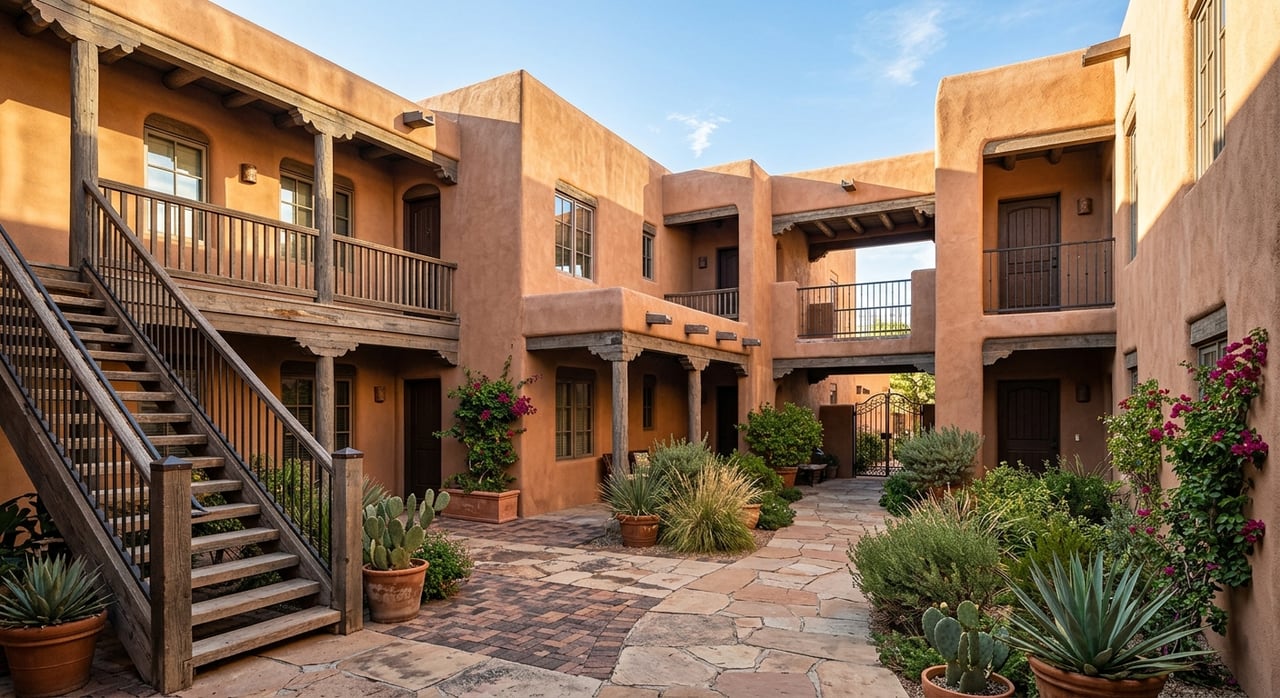
Thinking about a condo or loft in Santa Fe’s Railyard District? You are not just choosing a home style. You are choosing a more urban way to live in one of Santa Fe’s most active mixed-use areas. If you want to understand how ownership, parking, amenities, and condo documents work here, this guide will help you ask smarter questions and move forward with confidence. Let’s dive in.
The Railyard is not a typical residential subdivision. It is a 50-acre mixed-use redevelopment of former rail-industrial land, with studios, galleries, museum space, retail, restaurants, live-in artist studios, apartments, and more than 13 acres of open space.
That mix shapes daily life in a big way. Instead of private yards and quieter residential blocks, many buyers are drawn to the district for shared public spaces, walkability, and easy access to shops, dining, and cultural venues.
Railyard Park is a major part of that appeal. Current district information describes a 13-acre green space with 28 gardens, public art, a children’s play area, and year-round events.
The area also stands out for transit access. The Santa Fe Depot serves as the Rail Runner’s northern terminus, which adds a regional transportation connection that many other parts of Santa Fe do not offer.
In the Railyard, condos and lofts are often part of mixed-use or condominium-oriented projects rather than stand-alone residential communities. Developer materials for the district cite examples such as Market Station, Twisted Cow Compound, Trailhead Terraces, and Thull Railyard.
City planning materials also help explain why the housing stock feels different here. Much of the Railyard area is zoned commercially, with Downtown and the Railyard treated as a core urban focus area.
For you as a buyer, that usually means a different ownership tradeoff than a detached home. You may give up private land and a traditional garage in exchange for shared walls, common areas, and a location centered around activity and convenience.
This can be a strong fit if you value being able to walk to parks, galleries, markets, restaurants, and the train. It can feel less ideal if you want more separation, more storage, or fewer building rules.
When you buy in a condo or association setting, the documents are not just routine paperwork. They explain the rules, costs, and risks that come with the property.
In New Mexico, if a property is governed by a homeowner association, the seller must provide the declaration, bylaws, covenants, rules, and a disclosure certificate before closing. The association must furnish the certificate within 10 business days of request, and the purchaser may cancel within 7 days after receiving it.
If the property is a condominium unit, the New Mexico Condominium Act requires a resale package with the declaration, bylaws, rules and regulations, and a resale certificate. The association has 10 working days to provide that certificate.
That resale certificate should disclose key financial and operational details. These include monthly common expense assessments, unpaid or special assessments, other fees, anticipated capital expenditures, reserves, the current operating budget, judgments, insurance coverage, and leasehold-term information.
One of the most important early steps is confirming how the property is legally structured. Some Railyard properties may be condominium units, while others may be part of a planned community or mixed-use association arrangement.
That matters because the governing documents control what you can actually do as an owner. The marketing language may call a property a loft or condo, but the recorded documents define the rules, fees, and ownership rights.
This is especially important in a district with residential and commercial uses close together. A building may have one master association or separate residential and commercial associations, and that can affect how costs and responsibilities are shared.
Parking is one of the biggest practical differences between the Railyard and a detached-home neighborhood. City planning materials say Downtown and the Railyard are the only focus area where Santa Fe manages on-street parking and public parking structures, and that this area has the city’s most critical parking challenges.
The city actively manages more than 4,000 parking spaces concentrated in Downtown and the Railyard. That tells you parking is not an afterthought here. It is part of how the district functions.
The current city parking page lists the Railyard Municipal Garage at 503 Camino de la Familia with 382 spaces, including accessible spaces and EV charging, open daily from 7 a.m. to 1 a.m. It also lists the Railyard Surface Municipal Lots with 317 spaces.
On-street meter parking is enforced Monday through Saturday from 8 a.m. to 6 p.m. The posted rate is $2 per hour for the first two hours and $3 per hour after that.
Parking conditions can also vary by block. In the Baca area, district materials note free street parking, spaces on Flagman Way near Baca Street, and some business-dedicated parking.
For that reason, you should never assume one Railyard property handles parking the same way as another. Building-specific details matter.
Before you commit, ask for clear answers about how parking works for that specific property.
These questions can shape your day-to-day comfort just as much as the floor plan. In a mixed-use district, convenience often depends on details that do not show up in listing photos.
The Railyard attracts buyers who want location and lifestyle built into their purchase. Its appeal is closely tied to the district’s public amenities and activity.
Current area materials highlight markets, galleries, shops, restaurants, Railyard Park, and Rail Runner access. The Acequia Trail also links the Baca area to the North Railyard, reinforcing the district’s walk, bike, and transit-friendly character.
For many buyers, these amenities help offset the smaller scale or denser layout that often comes with condo and loft living. The tradeoff can make sense when you prefer access and energy over more private outdoor space.
From a resale perspective, these same features can support long-term buyer interest. People who shop the Railyard are often looking for a specific kind of in-town ownership experience, not just square footage.
When you review a Railyard condo or loft, focus on the items that affect both budget and lifestyle.
These points matter in any condo purchase, but they matter even more in a mixed-use district. Shared systems, shared costs, and building rules can have a real impact on how the property feels to live in and how easy it may be to resell later.
A Railyard condo or loft can be a great fit if you want a more connected, lock-and-leave lifestyle in Santa Fe. You may appreciate being close to galleries, restaurants, parks, trails, and transit, with less exterior maintenance than a detached home.
It may be a less natural fit if your top priorities are expansive private outdoor space, straightforward parking, or fewer shared-property decisions. That does not make one choice better than another. It simply means the right fit depends on how you want to live.
The key is to evaluate the property as an urban ownership choice, not just as a smaller home. In the Railyard, the building structure, association rules, parking setup, and surrounding activity all play a bigger role in the ownership experience.
With more than 35 years of local real estate and title experience, Robyn Tyra helps buyers look beyond surface appeal and understand the details that matter most. If you are exploring condos or lofts in the Railyard District, Robyn Tyra can help you evaluate options with clear, hands-on guidance.

Robyn Tyra is a seasoned real estate professional with more than 35 years of experience in both real estate sales and title insurance across Northern New Mexico. Deeply connected to the region’s rich history, diverse culture, and breathtaking landscapes, she takes pride in helping clients find their place to call home in Santa Fe and beyond. Known for her dedication to building lasting relationships, Robyn guides clients through every step of the buying or selling process with clear communication, integrity, and a seamless approach. Her greatest reward is seeing clients achieve their real estate goals while embracing the unique lifestyle that Northern New Mexico offers.
📍 123 E Marcy St., #101, Santa Fe, NM 87501
📞 (505) 982-0330


I have spent my career in Northern New Mexico in the real estate industry with over thirty five years in both real estate sales and title insurance. My commitment to you is to make the real estate process of buying and selling as seamless as possible through active communication and listening. We will work together every step of the way to reach your real estate goals.